Table Of Content

In addition to being luxurious, the Titanic was also supposed to be superior in terms of its safety measures. Whilst ultimately, many of these failed, the intention is clearly shown in some of the design and when building the Titanic. The claim that the Titanic was ‘virtually unsinkable’ rested on the ship’s 15 watertight bulkheads that divided the hull into 16 watertight compartments. Watertight doors were designed so that they could seal off the compartments in an emergency, thus allowing a safe evacuation of passengers. However, their potential was limited and when the iceberg was hit, the first six compartments were flooded and these measures failed, fatally.
Building Stages of the “Olympic.”
The presumption has always been that the three “missing” designs would be scaled-up versions of the Big Four liners, particularly Adriatic, the last of that grouping. We can only wonder at what the first conceptions of White Star’s new mammoths might have been. A good portion of the film was also filmed throughout Los Angeles County.
Titanic construction and safety choices
See some examples of much bigger 3D printed parts in our trade show props section. Nearly two decades ago Zaller dove down to the site of the wreckage and got face to face with the ship. With boarding passes in hand, visitors waiting to climb aboard a luxury cruise ship hear festive Gaelic string music play as they approach the dock. Titanic Design's large scale 3D printers allow for life size parts to be printed in one piece. Enable our customers to produce high quality parts while still leveraging 3D printing ability to create custom parts in complex geometries. As part of a design charrette a redevelopment of Santa Rosa, CA.
VFX Pro Who Dove to Titanic with James Cameron Discusses Sub Design and Safety Protocols Following Titan Tragedy: “It Just Didn’t Seem Right” - Hollywood Reporter
VFX Pro Who Dove to Titanic with James Cameron Discusses Sub Design and Safety Protocols Following Titan Tragedy: “It Just Didn’t Seem Right”.
Posted: Sun, 25 Jun 2023 07:00:00 GMT [source]
What are some highlights in the Titanic exhibition?
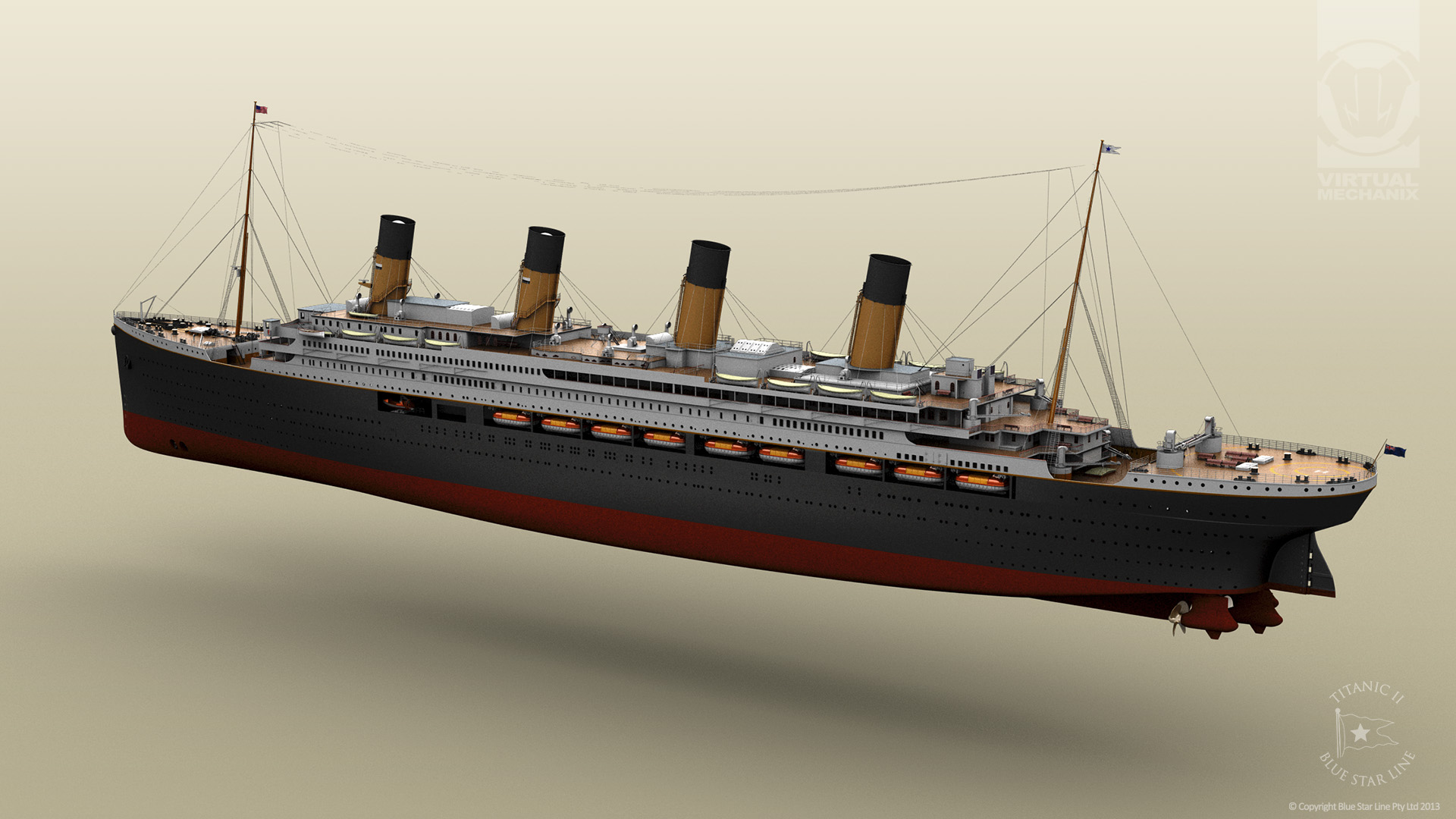
Titanic’s overall design was sleek and powerful, so the fourth funnel produced a look of pleasing symmetry. The setting for the building of these colossal ships was the Harland & Wolff shipyard in Belfast, Northern Ireland. The company was founded in 1861 by Edward James Harland and Gustav Wilhelm Wolff.
Those who required an after-dinner drink could find exactly what they wanted in the well-stocked bar. The walls were covered with “boiseries” (elaborate wooden carving) which gave the room a distinct symmetrical appearance. If a parlour suite didn’t suffice, a wealthy family could purchase several first-class cabins adjacent to one another and open the interconnecting doors between the cabins to have a suite of their own. When we explore the Titanic interior, we need to understand that whilst there was a world of difference in luxury between these classes, Titanic raised the bar for all onboard.
Watch of richest Titanic passenger sells for $1.5M
The Grand Staircase — recognizable to anyone who saw James Cameron’s 1997 blockbuster movie "Titanic" — and the First-Class Promenade have been recreated with sufficient splendor to evoke the real ship. No detail appears to have been spared; doors in the Promenade even have room numbers. It was almost as though the final touches were being placed on the building of a ship — which, in a certain sense, they were. Please enable it in your browser settings and refresh this page.
The Intended Exterior of Design "D" For the Olympic Class
On the Promenade (A) deck, first-class passengers could avail themselves of the Verandah Café and Palm Courts. The large windows, wicker furniture, trelliswork, potted plants, and checkered floors in these rooms suggested being in the English countryside. First-class children favoured the Verandah Café and often went there to play together. Third-class passengers did their promenading on the Bridge (B) deck since they weren’t allowed on the Boat deck. The Bridge deck was a platform like poop deck located at the aft of the ship.
Titanic’s Funnels:
Work was all the time proceeding apace in the interior of the vessel in connection with the beams and plating of the various decks. The view of the shelter deck looking aft, reproduced in Fig. 29, gives a very good impression of the vessel's size and shows clearly the deck beams and plating. The shell plating of the Olympic was completed and almost entirely riveted by the beginning of April, 1910, as will be seen from the next photograph (Fig. 30), taken on the 7th of that month. It will be noticed that the sister ship Titanic, on the adjoining berth, was by this time fully framed.
The front of the ship could dip further into the water to capture the initial sinking. Some of the most notable scenes of during the making of Titanic were a result of incredible special and practical effects. Specifically, the sinking of the ship is still one of the most impressive aspects of the filming of Titanic. The carpeting, wall paper, the furniture and even the davits used to lower the lifeboats were all created with painstaking detail under the direction of Cameron. These may seem like minor details that an audience may not even be able to spot, but James Cameron could and that’s what was important — creating the most historically accurate set possible. This is especially true for the making of Titanic as a historical period piece.

The Turkish baths also offered a freshwater drinking fountain (made of marble) and featured ornate tiles in the Arabic style and comfortable lounge chairs where passengers could rest. Alexander Carlisle preceded Thomas Andrews as chief naval architect, being replaced by the younger man when he stood down. Carlisle is generally thought to have been responsible for much of the internal design of the ships, their fixtures, fittings and equipment.
Interested to see where Titanic ranks among the rest of his movies? Check out our next article where we rank Cameron’s best films with the filmmaker in mind. The water line of the final shots were also composited to give an additional tilt to the sinking ship. The rear portion of the ship could rotate a full 90 degrees. They used this to capture the final moments of the sinking ship.
A special feature is the cast-steel hawsepipe attached to the upper portion of the stem bar, to take the steel wire hawser provided for use with the central bower anchor. Advancements in material science has opened 3D printing up to many applications outside of rapid prototyping. Titanic Design's large scale 3D printers are able to product durable life size parts with carbon fiber nylon. This approach has enabled Renovo Auto to be able to rapidly iterate on their platform while still being able to hold up to a high UV and temperature environment. Harland and Wolff had to make alterations to their shipyard (larger piers and gantries) to accommodate the giant liners, Titanic and her sister ship Olympic.
The real Titanic still rests about 13,000-feet underwater in the Atlantic Ocean, where the ship sank in 1912 after hitting an iceberg. The legendary vessel is now part of an exhibition that will take guests on an incredibly realistic and immersive journey inside the ship. The watertight doors giving communication between the various boiler rooms and engine rooms are arranged, as is usual in White Star vessels, on the drop system.


No comments:
Post a Comment